DIFFERENCE26-09 Secularism and Atheism
00:00
I want to preach today about an unashamed spirit — a confident spirit — an unashamed authority that God wants on His people: the settled certainty that everything He has promised in His Word is true.
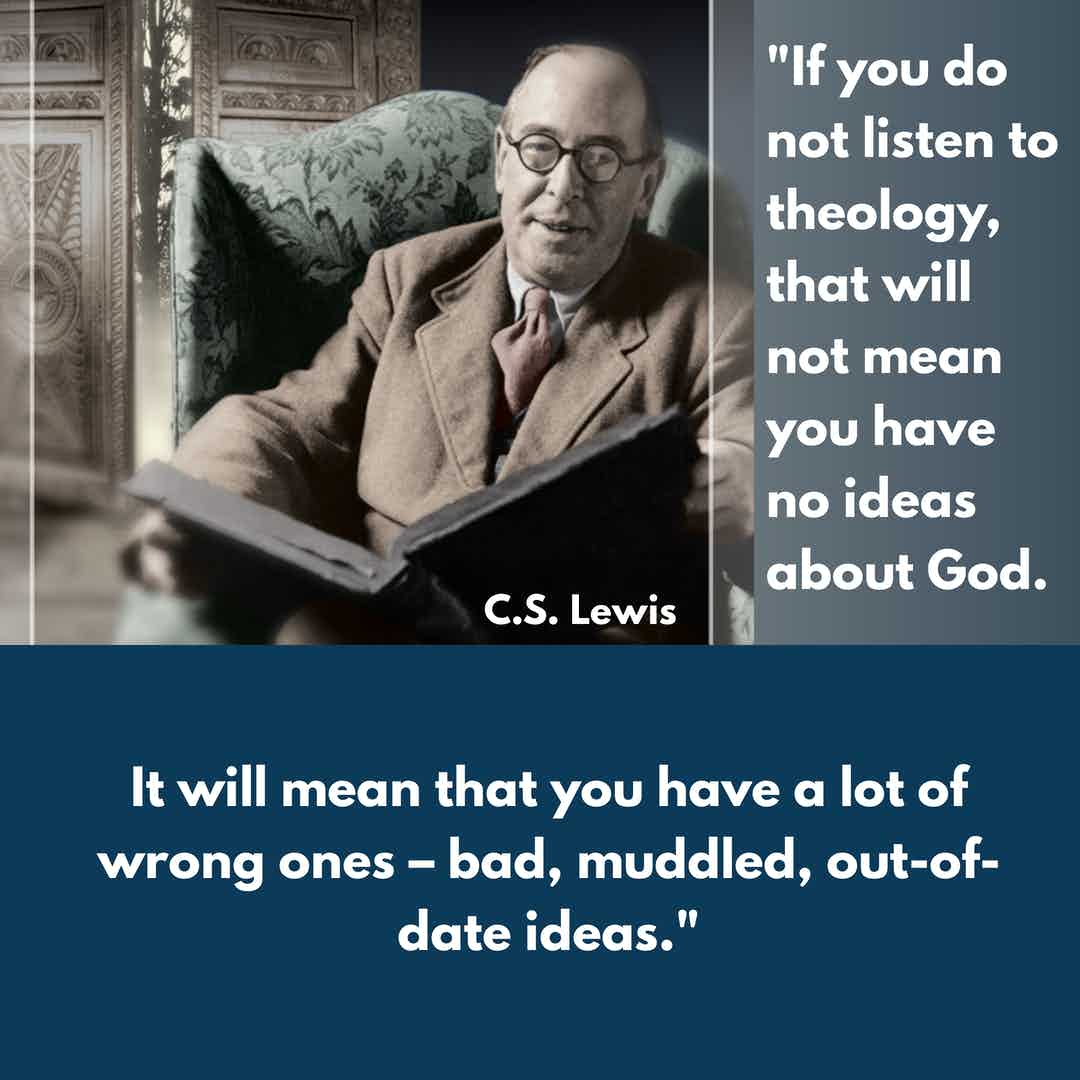
I began reading C.S. Lewis as a young Christian, and the way he thought and wrote connected with me. Lewis was a professor at Oxford University. Before he became a Christian, he was a lifelong atheist, until the influence of his friend JRR Tolkien. From that time, Lewis applied his brilliant mind to the defense of the Christian worldview.
He didn't treat Christianity like a fragile heirloom hidden from the modern world. He handled faith like it was demonstrably true — able to stand on its own two feet in the classroom, the hospital room, or at a graveside, without collapsing.
My talk today is my attempt to preach like C.S. Lewis might if he were here.
Our course is called What's the Difference?
And our topic today is Secularism and Atheism viewed from the Christian worldview perspective.
The question today is simple:
Does holding the secular (worldly) or atheist worldview, in which there is no God, help a person make more sense of their world?
If you're trying to build a life that is intellectually rational, emotionally healthy, and deeply meaningful... does it help or does it hurt to keep God in the picture?
St. Paul, had a clear answer to that question:
"For I am not ashamed of the Gospel of Christ, for it is the power of God to salvation for everyone who believes..." (Romans 1:16)
I don't need to whisper this, apologize for it, hide it, edit it, or be embarrassed to speak of it. I am not ashamed of the Gospel of Christ — that constellation of salvation truths revolving around the Cross of Christ, the love of God, and the eternal salvation inviting whosoever wills to come.
I am not ashamed. That is the spirit God wants on His people.
"O Death, where is your sting? O Hades, where is your victory? The sting of death is sin, and the strength of sin is the law. But thanks be to God, who gives us the victory through our Lord Jesus Christ." (1 Corinthians 15:55–57)
What Makes Morality Morally Binding?
No worldview in human history honors reason, morality, logic, suffering, beauty, human dignity, justice, historical validity, forgiveness, and hope like biblical Christianity. It's time for God's people to say so.
Christian... say so.
Say it with your life.
Say it with your love.
Say it with your attitude: I've got a secret strength and his name is Jesus.
If you want logic, you can't beat Christianity. If you want beauty and human flourishing, you can't beat Christianity.
And I want to take on the hardest questions to make that case.
1. Christianity Explains Why Evil Is Actually Evil
The first reason we do not need to be ashamed of the Gospel is this: Christianity explains why evil is actually evil.
The modern secular person often says, "I do not need God in order to be moral." It's true. Many atheists are kind, thoughtful, and generous. So the question is not: can an atheist behave morally? Of course they can.
The deeper question is: in a universe without God, what makes morality morally binding?
If the secular atheist is right, then the universe is only matter in motion.
Nothing beyond matter, energy, chemical reactions, instincts, and evolutionary struggle.
In a world like that, why should I love my neighbor? Why protect the weak? Why should genocide be wrong, even if an entire nation votes for it? Why be moral?
Why love at all?
Without God, you can still have laws, customs, public opinion, and consequences. But you simply cannot make a compelling case for a moral law that stands above every culture, government, dictator, and human opinion.
Even so, every normal person lives as if that moral law exists.
We know slavery is evil even when courts protect it.
We know abuse is evil even when the abuser justifies it.
We know hypocrisy is evil even when it wears religious clothing.
That matters, because some here have been wounded by people wearing religious labels. You saw people talk about grace but weaponize shame, preach love but practice control. And something inside you said, "That is wrong."
And you are right.
But WHY are you right?
Where did you get the moral code that says abusers, hypocrites, and genocidal maniacs are wrong? Your system has to answer: why is evil evil?
Christianity does not ask you to silence that protest. It explains why the protest is there. Your outrage against hypocrisy is not meaningless noise.
Your grief over injustice is not a chemical accident.
Your instinct that people should not be crushed is not evolutionary wiring.
It is the echo of the Maker — proof you were made in the image of a moral God.
"Who show the work of the law written in their hearts, their conscience also bearing witness..." (Romans 2:15)
C.S. Lewis said it perfectly: a man does not call a line crooked unless he has some idea of a straight line.
You cannot say, "That should not have happened to me," unless you believe there is a standard of what should happen — which is exactly what atheism erases!
The secular worldview wants the fruit of Christian morality, but it has severed the root. It wants human dignity, but cannot explain why an accidental collection of atoms deserves that dignity.
It is borrowing moral capital from a God it has denied.
And here is where the logic of the Gospel becomes emotionally beautiful.
If there is no God, the wrongs done to you in secret will never be answered.
The abuse no one saw, the betrayal no one believed, the injustice buried under money or religious reputation — all of it vanishes into the dust. The universe will not care.
But if the Moral Law is real, then the Lawgiver sees. Nothing is buried forever. No tear is wasted. The things that were done to you matter, because you matter to Him.
Yet, if we are honest, this idea of a moral law creates a disturbing problem.
The same Moral Law that says what was done to you matters, also says what's been done by you matters too. We have all broken God's laws and instinctively know it.
So picture God's moral law as a mountain — the towering standard of perfection standing over every one of us.
And this is where Christianity breaks away from every other system on earth.
Religious systems say: you have to pay for your moral failures by climbing that mountain of good works and rituals.
A secular system says: what mountain are you talking about? What moral requirements are you talking about?
But a world with no mountain is a world with no moral code. And a world with no moral code is a world with no human dignity.
Under a secular system, what are you? You are a collection of molecules powered by energy.
What is your baby? A collection of molecules powered by energy.
Isn't that exactly what you can say about a fish or a worm or a light bulb?
The secular viewpoint is the death of human dignity because it erases the sacredness of human life... and by doing so, obliterates both the need for and the logic of any compelling moral code.
But the Gospel says something entirely different. The mountain is real, the moral code is real, the justice of heaven is real — and human life is so precious to God that the Maker of the mountain came down.
God became human without ceasing to be God.
At the cross, He did not ignore the evil of the world; He absorbed it. He satisfied absolute justice while throwing the doors of mercy wide open, because that is the extent of His love.
So, Christian, do not be ashamed of the Gospel. When you call evil "evil," you are not taking your stand on a cultural mood swing.
You are standing on a logic and beauty nothing else comes close to — on the foundation of a God whose moral code is the infinite love eternally flowing from His heart.
Standing on that truth is standing with unashamed authority.
Evil is evil because humans are precious to God.